


African Pulse
This monthly presents studies on strategic and economic security developments in Africa, which hold particular relevance for India.
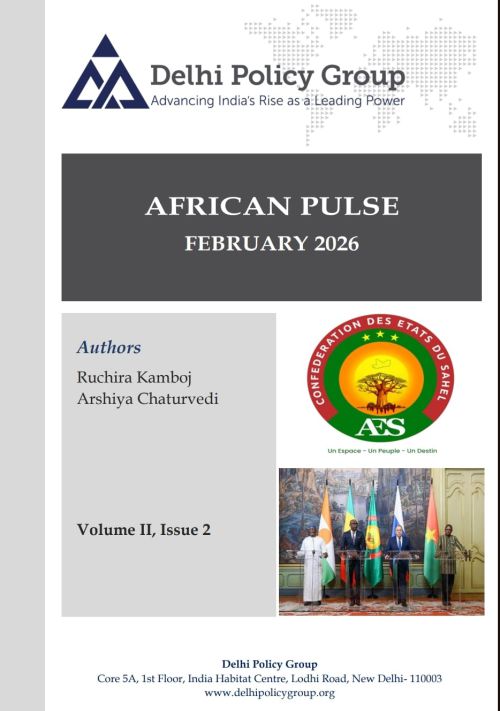
The geopolitics of the Sahel is undergoing a significant shift. In September 2023, Mali, Burkina Faso and Niger formed the Alliance of Sahel States (AES), a trilateral defence pact that marked their exit from ECOWAS and a decisive break from traditional Western partners, including France. The move signalled a bid for strategic autonomy and a reordering of regional alignments.
The AES seeks to build an independent regional security architecture while tackling urgent counterinsurgency and counterterrorism threats. However, limited national capacities and the sudden withdrawal of Western military support have created operational gaps that require resources, expertise and technology the three states do not yet fully possess.
Russia has moved quickly to fill this vacuum. After early involvement through the Wagner Group, Moscow transitioned to a state-controlled entity, Africa Corps, in 2025. It has since formalised defence ties through training support, military equipment transfers and agreements backing the AES Joint Military Force.
Beyond security, Russia has expanded cooperation into telecommunications, surveillance and space-based capabilities. Satellite agreements with Niger in 2024 and broader AES-level arrangements in 2025–26 illustrate Moscow’s shift toward long-term state capacity building.
This strategic pivot by the Sahel states reflects a wider African aspiration for agency and balanced partnerships, consistent with continental frameworks such as Agenda 2063 and AfCFTA. While Russia is consolidating its role and China deepens economic and security engagement, the region is becoming a theatre of competitive influence.
India, though less present so far, has an opening. Its model of partnership, focused on capacity building, affordable defence platforms, digital public infrastructure and respect for sovereignty, offers the AES countries an alternative that is cooperative rather than extractive, and aligned with their search for greater autonomy. The next India–Africa Forum Summit, expected in 2026, could provide a timely platform to translate this potential opening into structured engagement.
To read this issue, please click African Pulse, Vol. II, Issue 2.