


India Strategic Review
The ISR features an assessment of key developments, trends, and policies pertaining to India's immediate and continental neighbourhood and is authored by Lt. Gen. Deependra Singh Hooda (Retd.), Distinguished Fellow for Military Strategy.
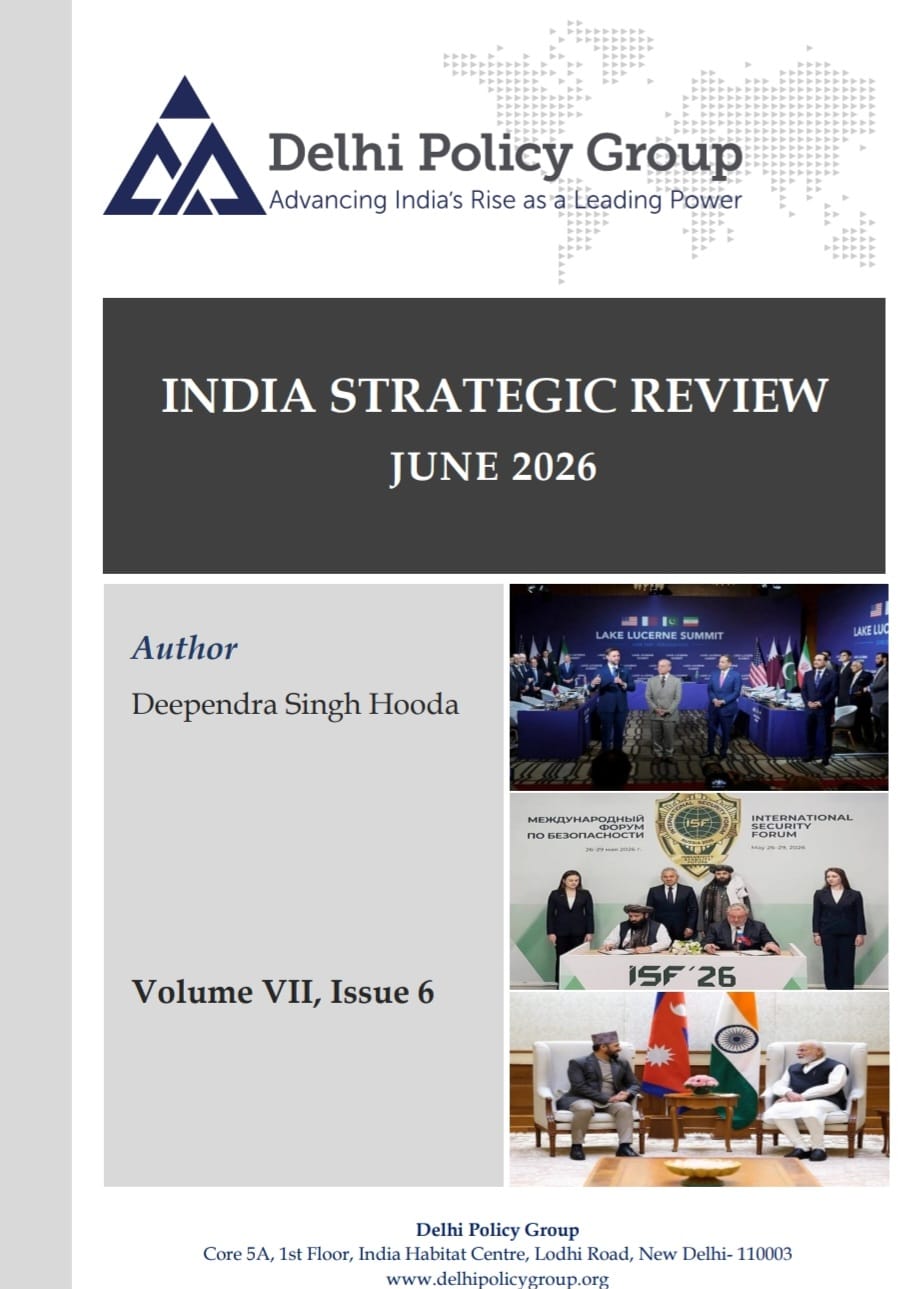
The culmination of Pakistan's months-long mediation in the US-Iran war came on June 17 with the signing of a 14-point 'Memorandum of Understanding.' The framework establishes a 60-day ceasefire extension and commits both sides to negotiate a final agreement. However, major issues, including Iran's nuclear programme and control over the Hormuz Strait, remain unresolved.
Pakistan's federal budget for FY2026-27 was presented on June 12 with a total outlay of $67.5 billion. Debt servicing at $28 billion remains the single largest expenditure head, while defence spending was increased by 18% to $10.8 billion. The budget reflects a state trying to meet IMF discipline while financing a worsening security environment.
Pakistan's internal security situation remains critical. A Jamaat-ul-Ahrar attack on the Sindh Rangers headquarters in Karachi on June 27, the sentencing of Baloch rights activist Mahrang Baloch to life imprisonment, and severe civil unrest in Pakistan-occupied Jammu and Kashmir underscore the deepening internal security crisis across the country.
Afghanistan's humanitarian crisis continues to worsen. The United Nations Office for the Coordination of Humanitarian Affairs (OCHA) said that malnutrition has worsened across much of Afghanistan, with conditions deteriorating in 26 provinces compared with 2025.
The Pakistan-Afghanistan conflict escalated again in June. Pakistan launched ground operations and airstrikes along the Afghan border on the night of June 28-29. Pakistan claimed that it had struck militant camps, while independent reporting showed that the airstrikes had hit civilian areas.
Chinese Foreign Minister Wang Yi held substantive discussions with National Security Advisor Ajit Doval on the sidelines of the 16th BRICS NSA Meeting in New Delhi on June 23. A thaw is visible in India-China relations, with the Kailash Mansarovar Yatra resuming for the second consecutive year and the reopening of border trade through Lipulekh after six years.
Bangladesh Prime Minister Tarique Rahman visited China from June 22-26. The two countries have agreed to a '2+2' defence and foreign affairs dialogue mechanism. China will support the proposed China-Bangladesh-Myanmar Economic Corridor, development of Mongla port, and the Teesta River project. From an Indian strategic perspective, these outcomes warrant close attention.
Some improvement is visible in India-Bangladesh relations with the resumption of tourist visas for Bangladeshi nationals, nearly two years after visa services were suspended amid the political unrest of August 2024. However, structural issues of border management, water-sharing, and Bangladesh’s foreign policy orientation remain contentious.
Nepal’s Rastriya Swatantra Party Chair Rabi Lamichhane’s visit to India, followed by Foreign Minister Khanal's visit, both in the first week of June, demonstrated that the Nepal government values its relationship with India. However, the Lipulekh border dispute resurfaced in the Nepal Parliament, underscoring that this border issue remains salient in Nepal’s domestic politics.
To read this Issue please click India Strategic Review, Vol. VII, Issue 6.